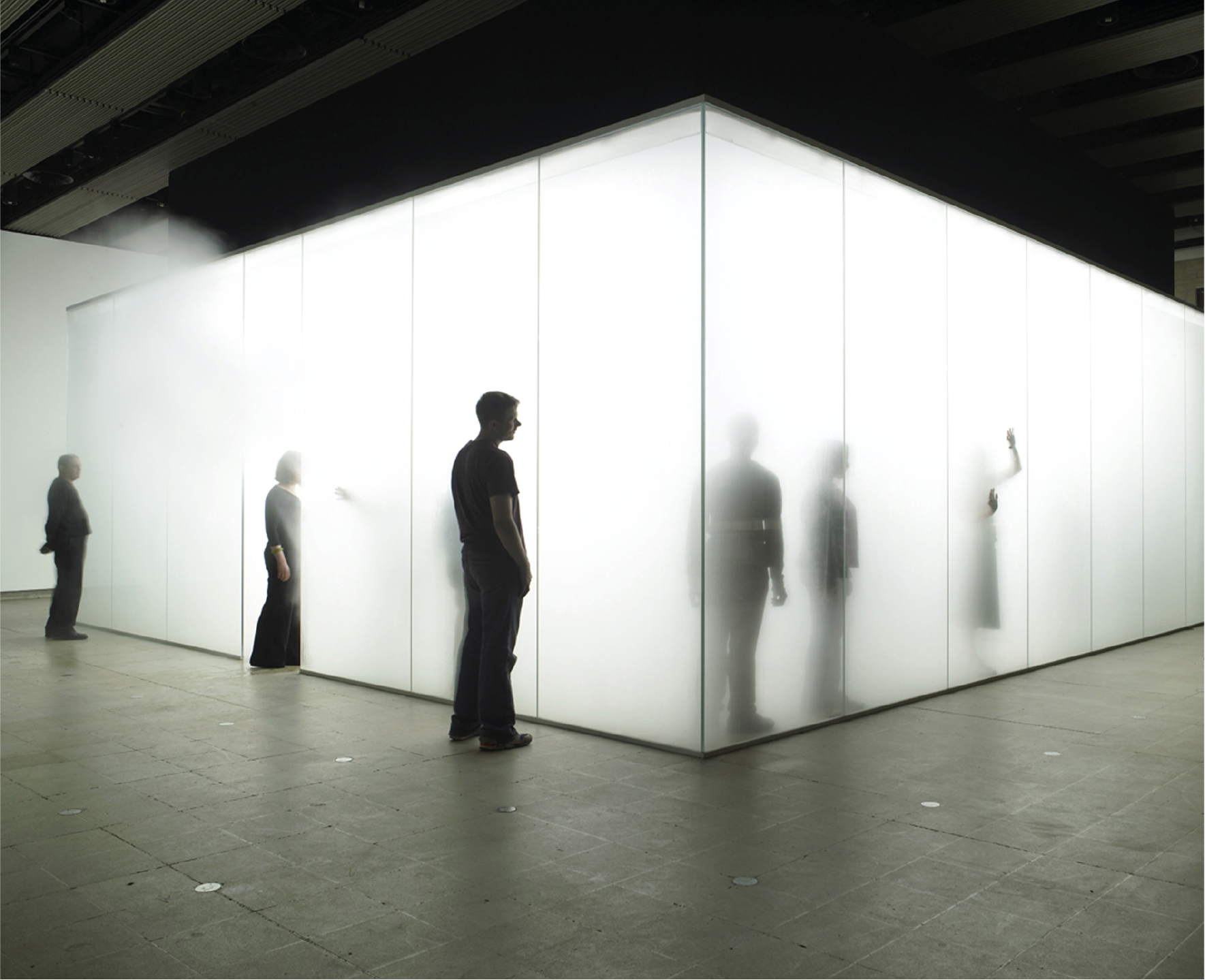
Blind Light, Antony Gormley
Sean Kelly Gallery, New York, USA
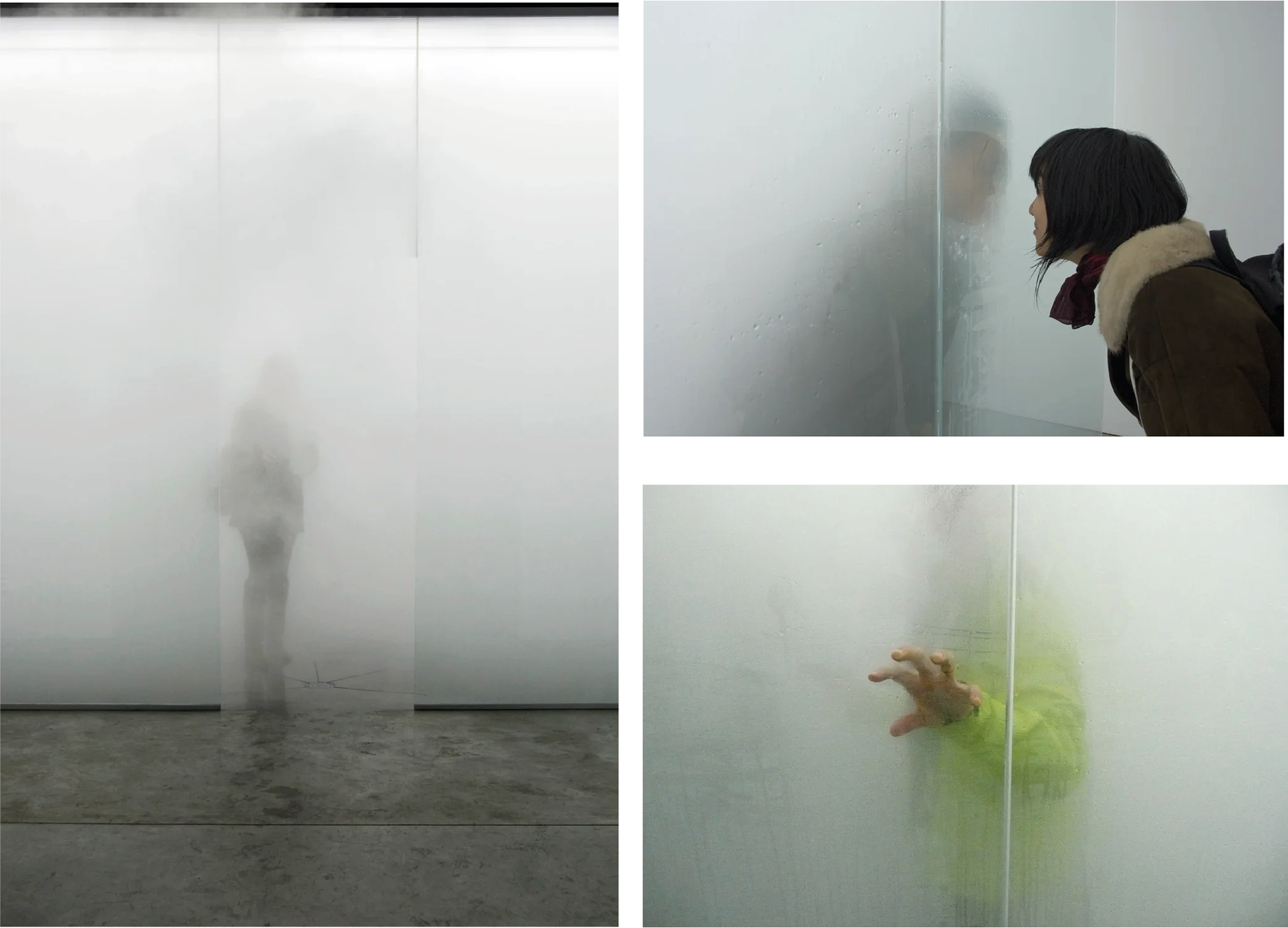
Challenging the limits of the spatial definition Not through a sculptural object, but in the nature of the space itself. In the blind light exhibition, the artist constructs the space as a sculpture and makes its form and occupation tangible, through the action of light and the presence of fog that fills the space and the meeting between them. The users become active agents - from characters that are inside the space to characters that create the space itself.
Site Analyzing
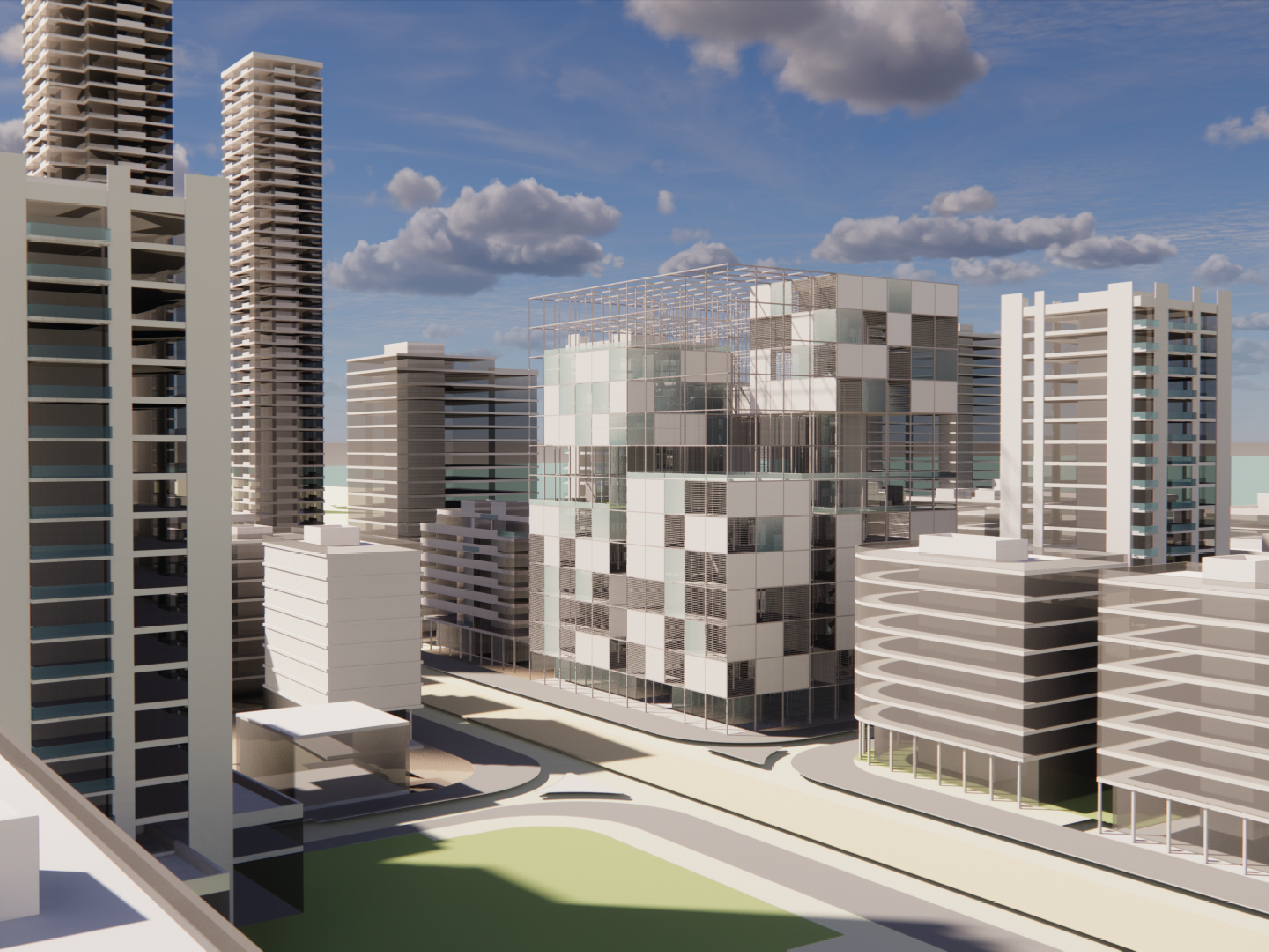
Elpsi 5 Tel Aviv
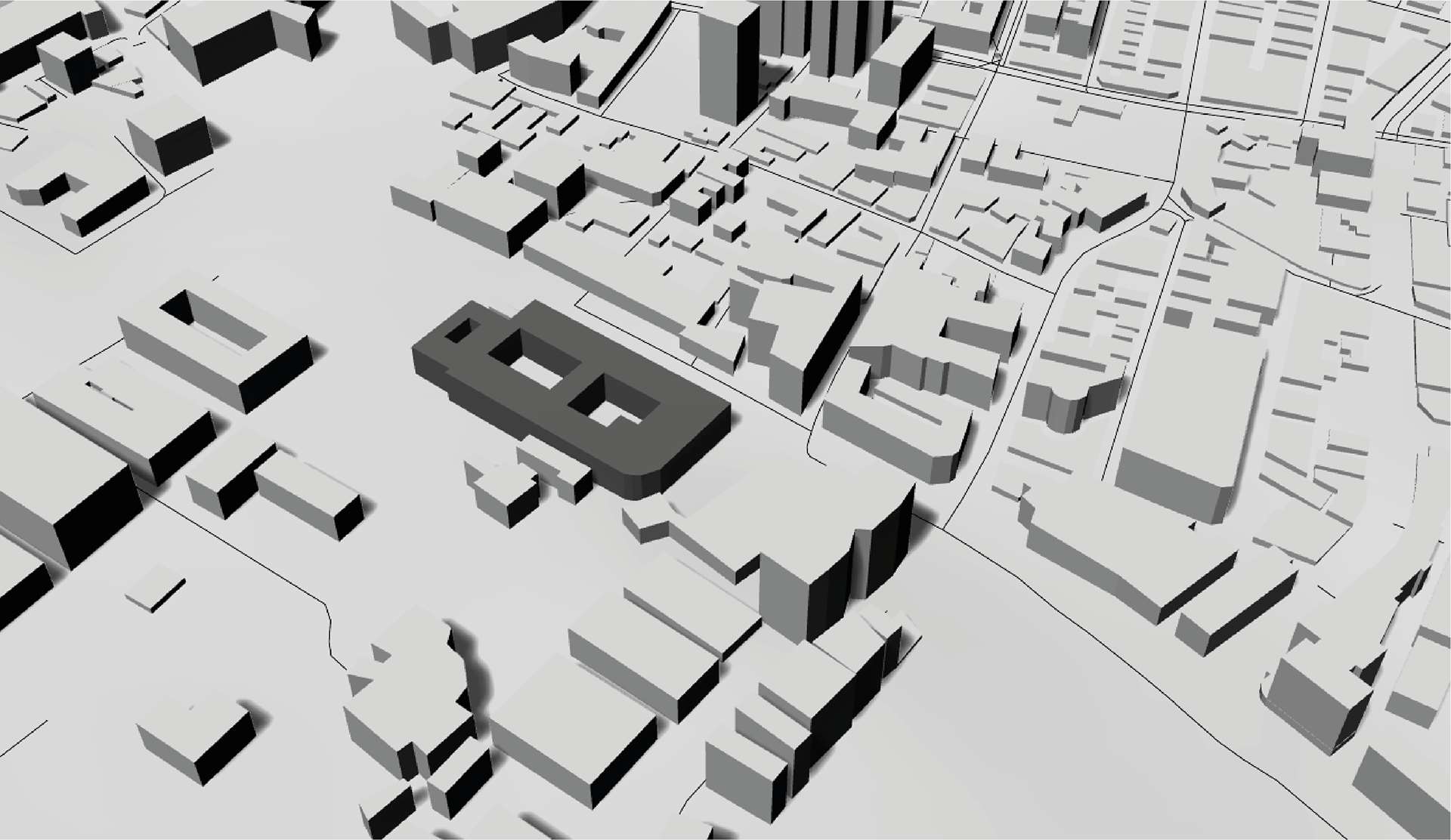
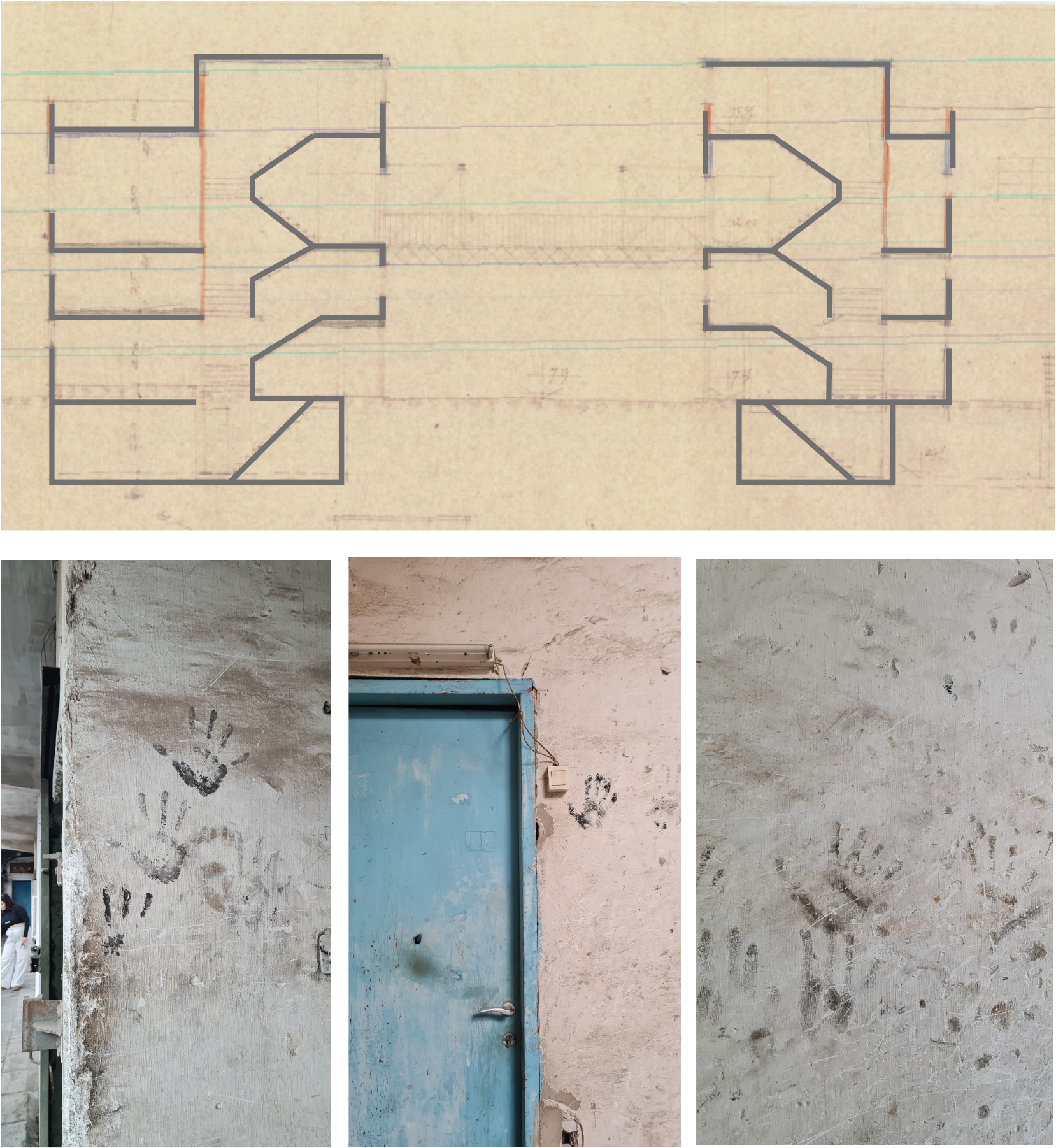
During the tour of the site, we noticed 2 points of connection between the site and the representative:
1. The building serves as a mirror image of itself The building has a symmetrical plan where its right side is the same as its left side The size of the inner courtyard is almost equal to the size of the interior rooms that surround the building, the building has two entrance and exit openings located on the facades facing the street. Also, the representative is based on Freud's theory of the repressed, which refers to the awareness that comes to the surface in a sudden way, accompanied by a feeling of anxiety from the ghost double of myself.
2. Handprints Throughout the building we found many handprints on the walls of the building. The building is inhabited by businesses mainly of small craft, a craft that leaves dirt on the hand, these handprints were probably created by the users of the building over the years and shows the various craftsmen who worked in it.
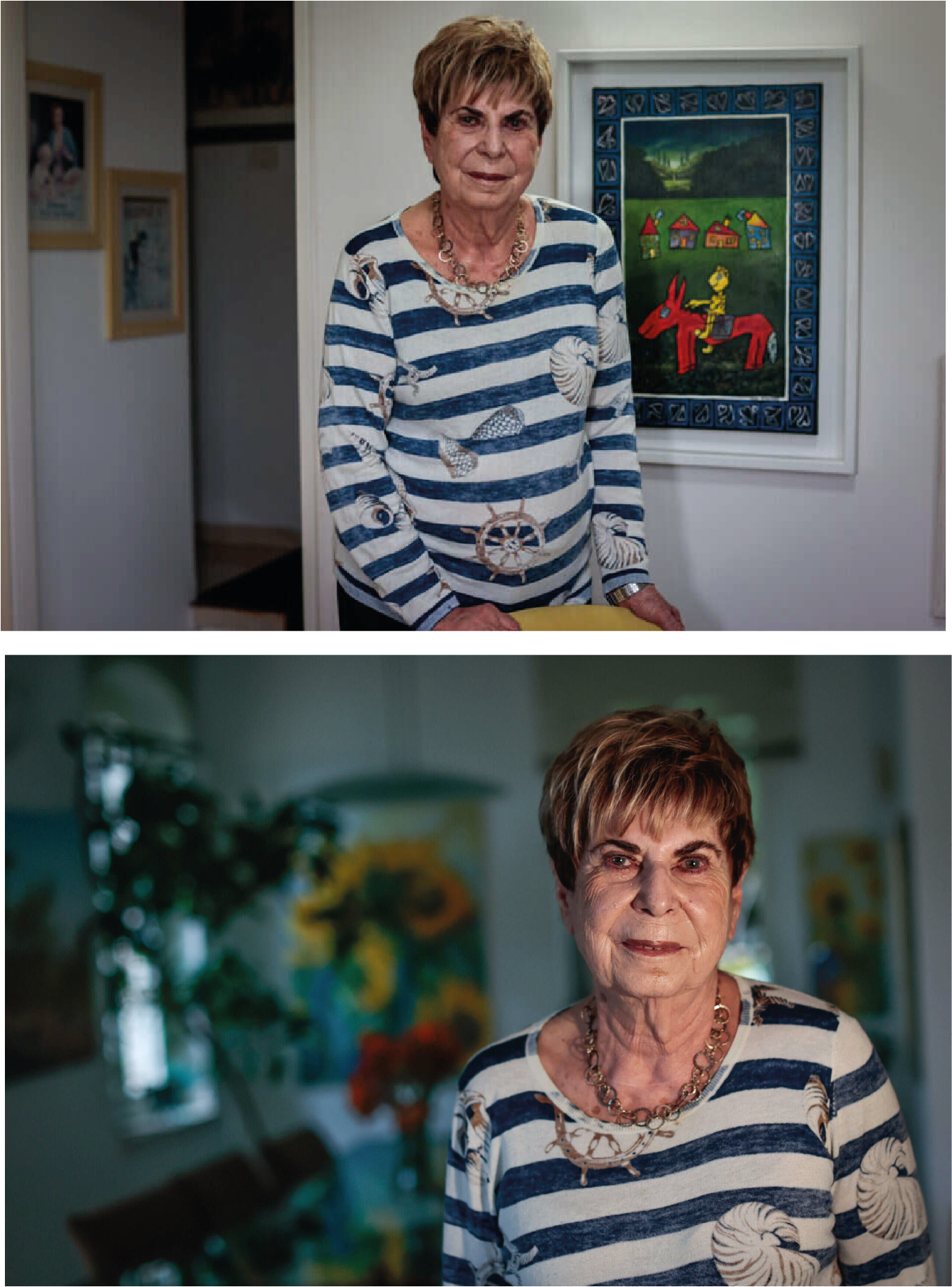
program: Professor Rene Gil
Born in Poland 1933
Active full-time pediatrician, lecturer and researcher, founder of the first pediatric intensive care unit in Israel. Director of the oldest children's department in Israel - at the Herzog Medical Center in Jerusalem.
During the Second World War she hid together with the women of the family who survived the German actions in hiding apartments and attics.
In 1946 she immigrated to Israel and completed her internship at Hadassah Hospital in Jerusalem and completed it in the USA.
2 children - 5 grandchildren
Hobbies: Meetings with friends hosting the family reading books
sports activities Physical condition: need support while walking, full-time job, good general health.
Guiding planning principles-
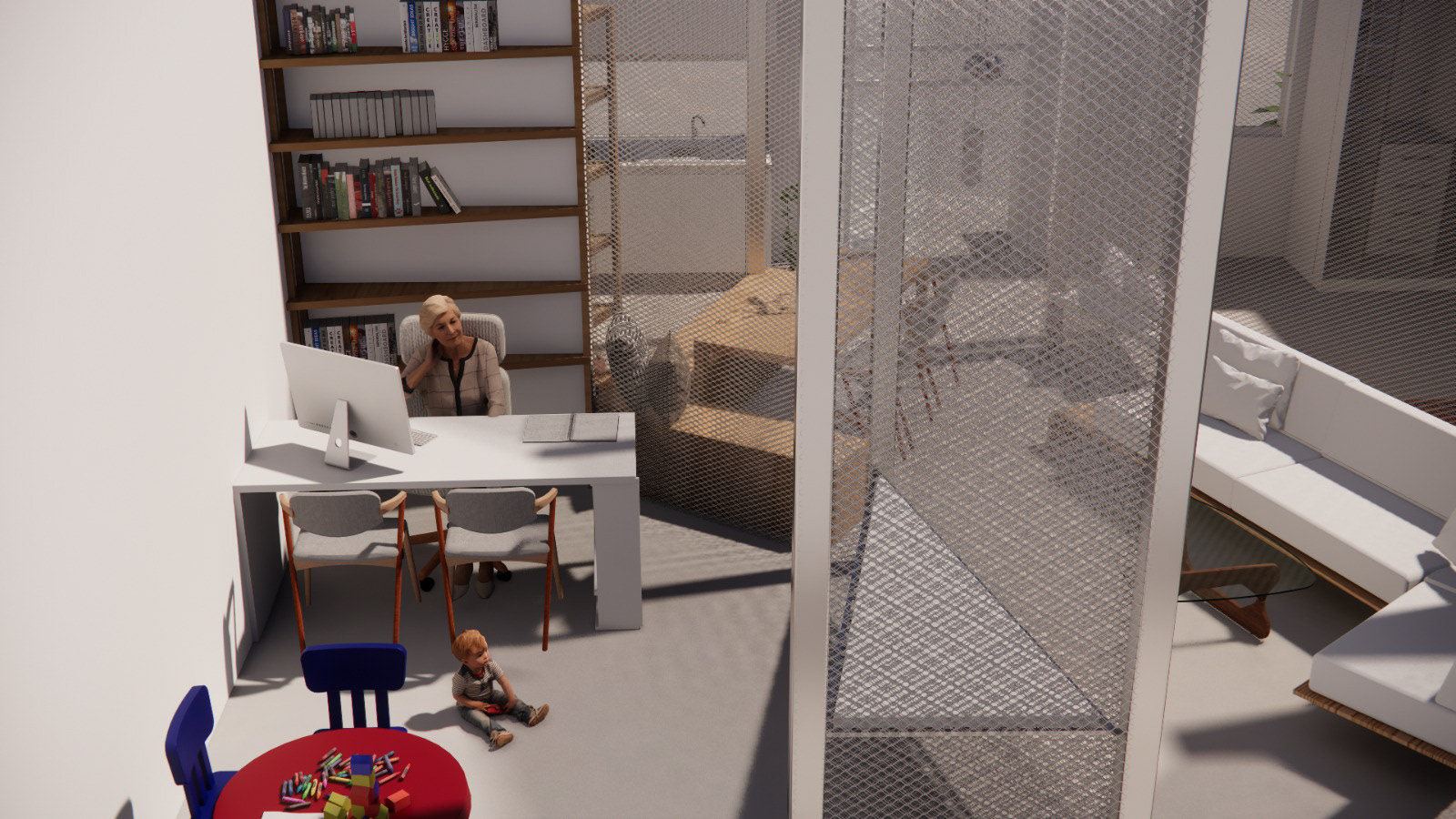
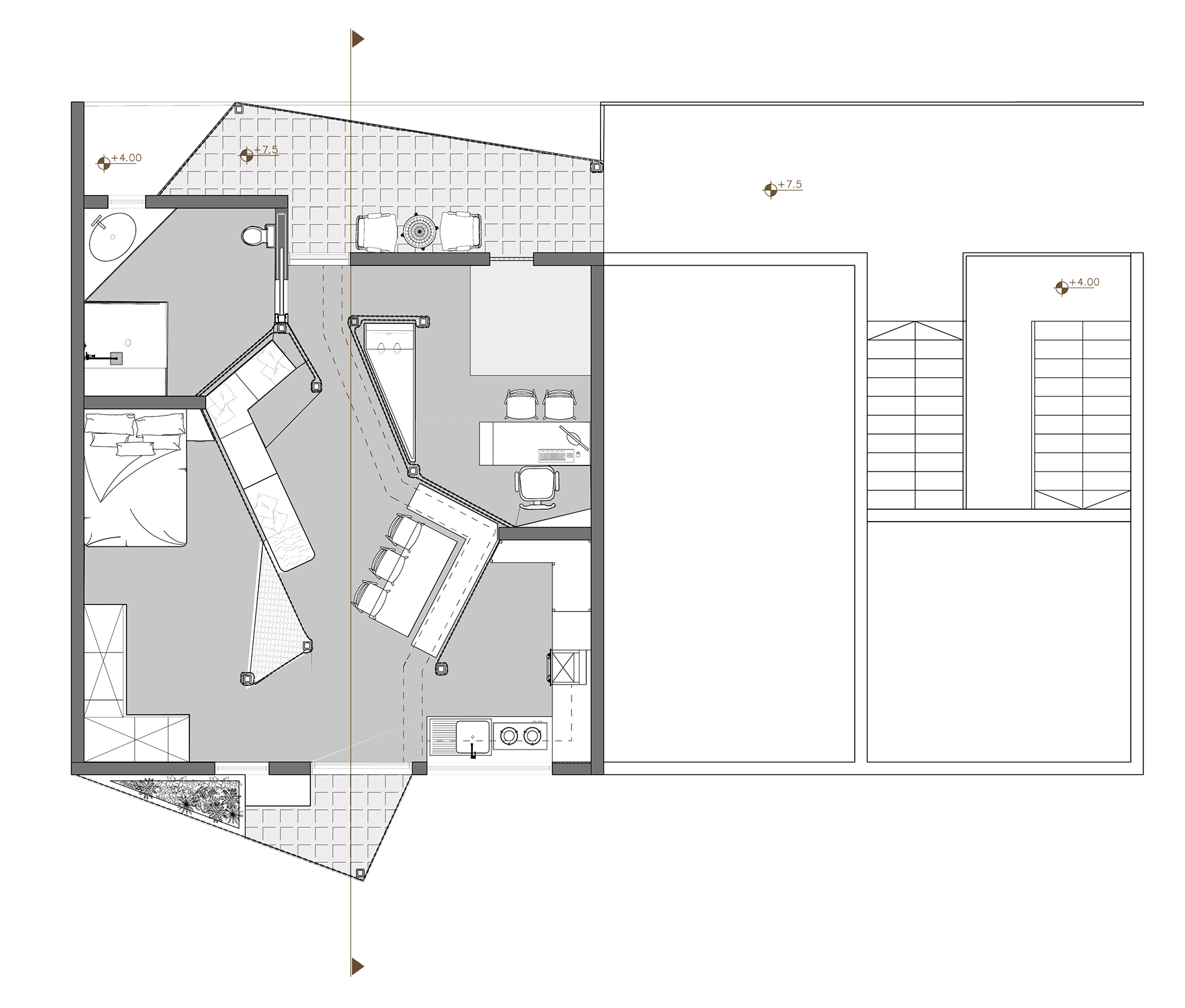
1. Allocation of space in the apartment for a clinic that also functions as a home office, to receive patients after retirement which will later become a room for the therapist.
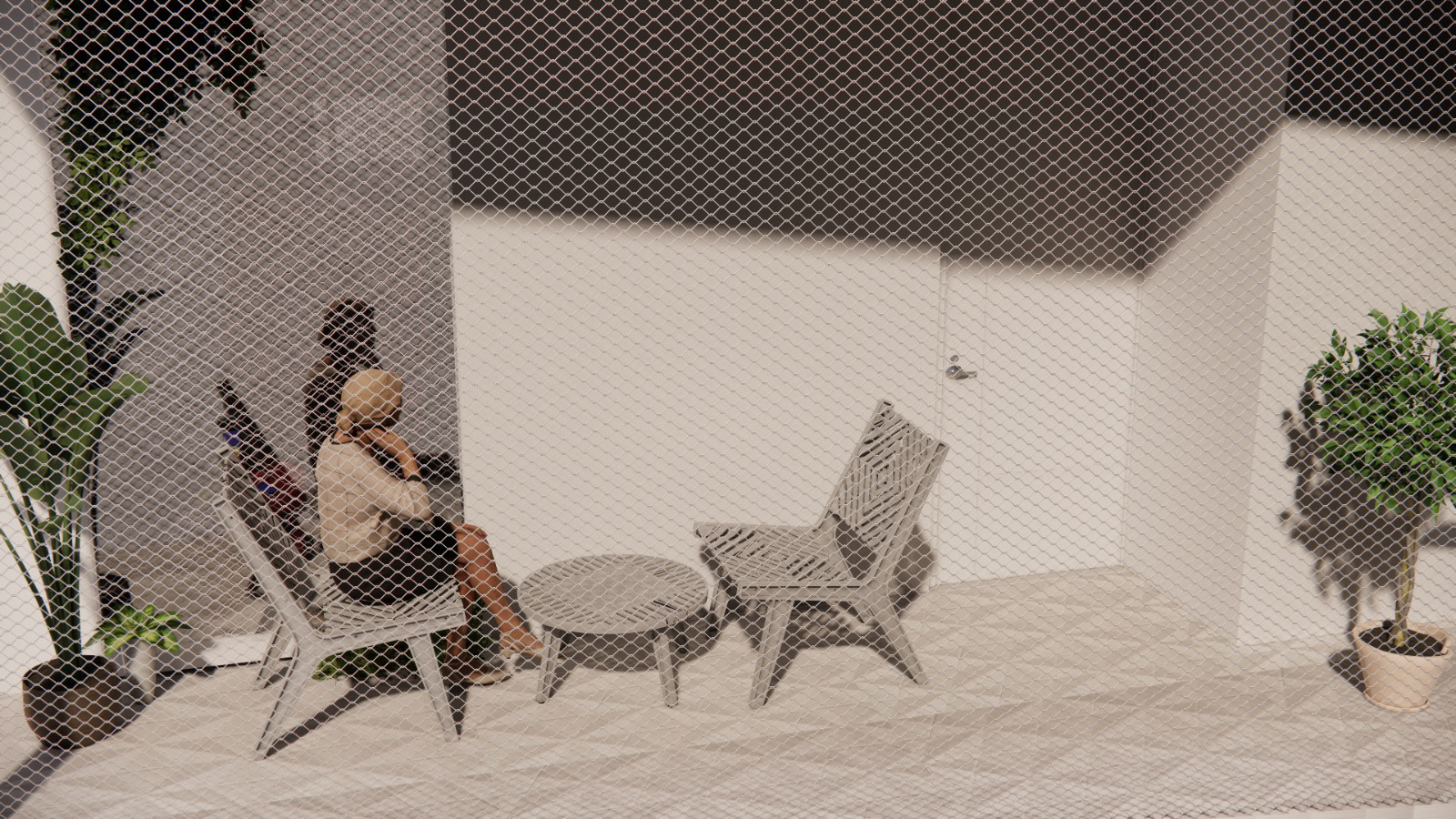
2. Creating a comfortable waiting area for visitors Storage areas for the reading and study books.
3. New big bedroom and small kitchen.
inspirations
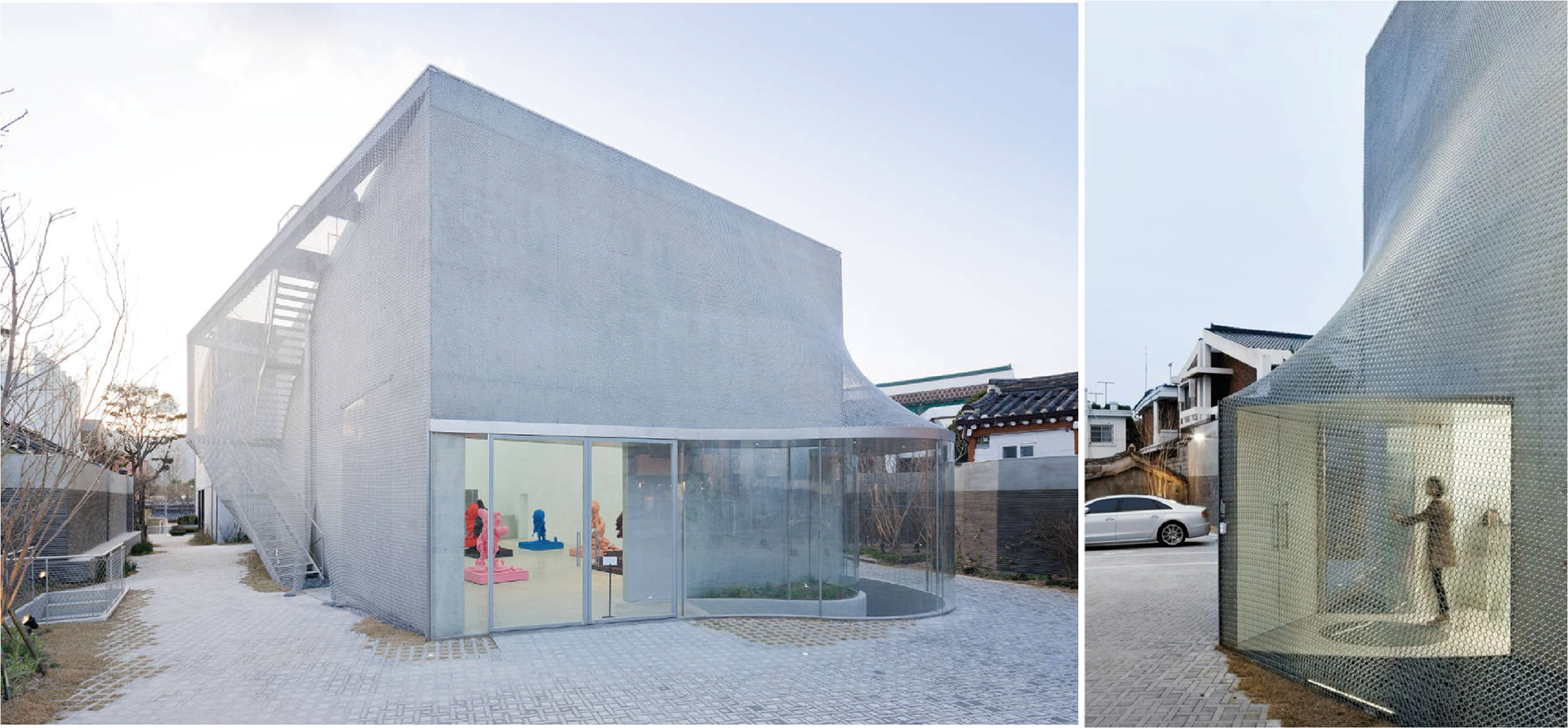
Kukje Gallery / SO-IL
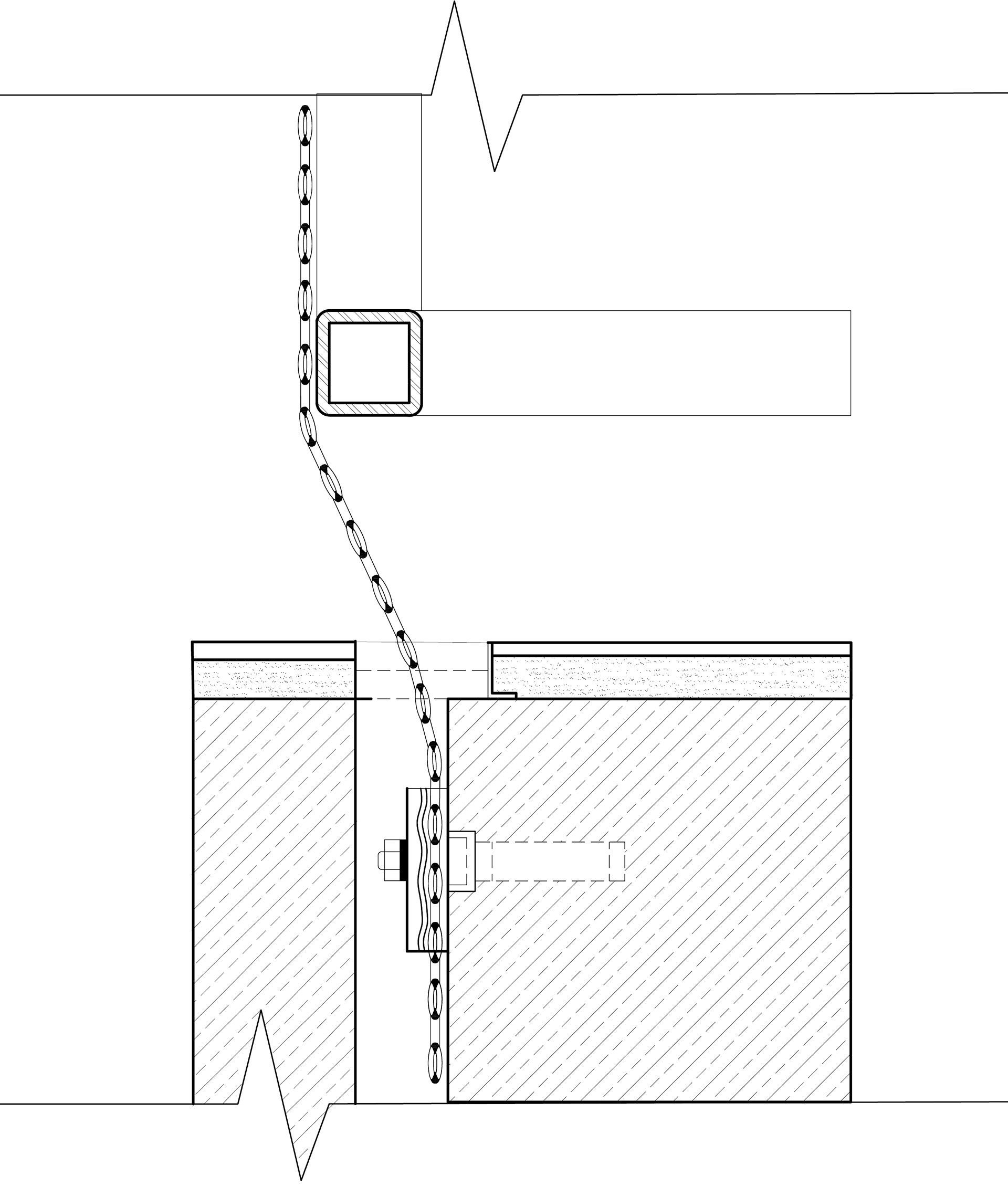
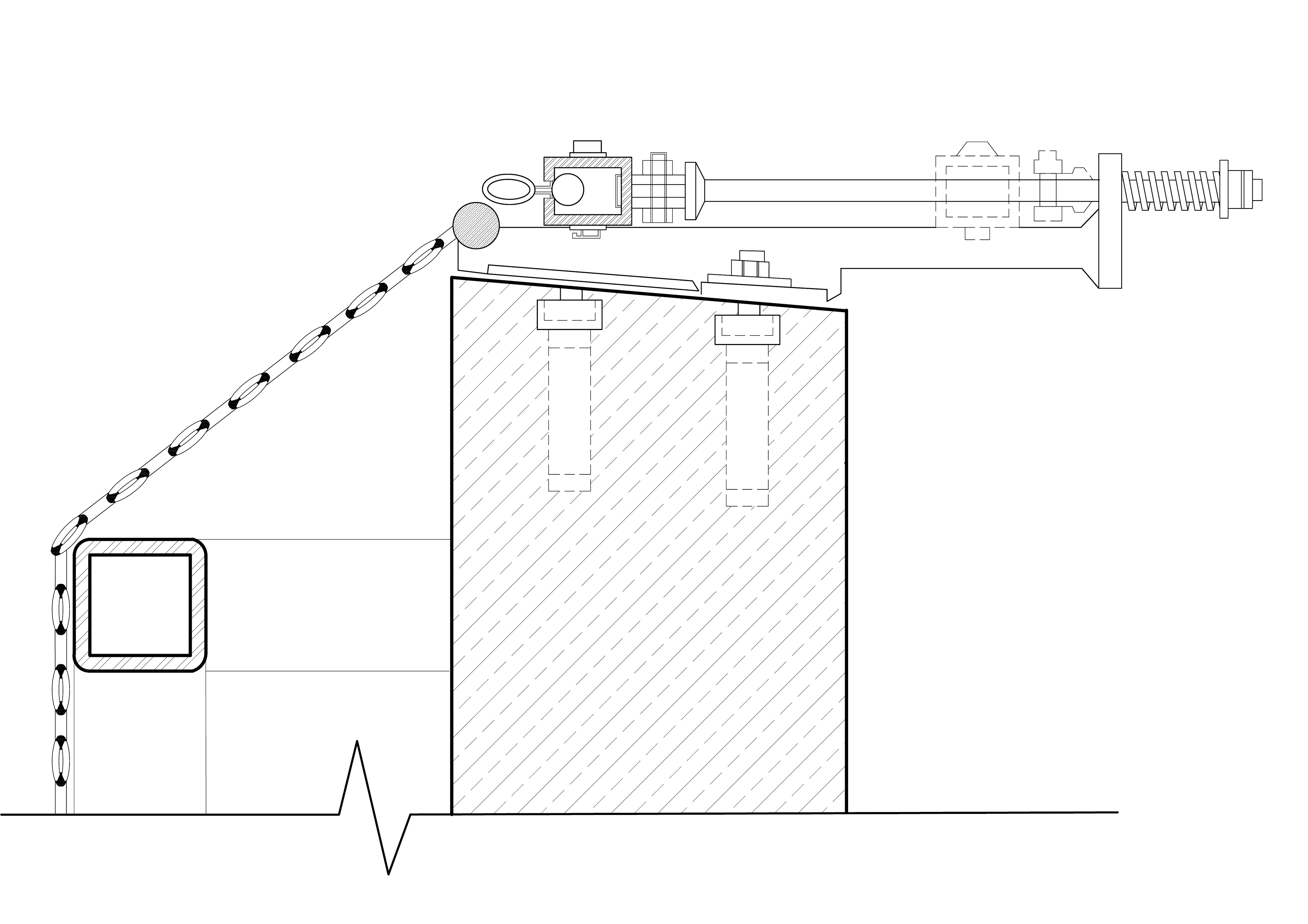
Using an elastic fabric made of stainless-steel rings that extends from the building line to the ground wrinkle free the interlocking rings were cut from coils of 3.5 mm thick wire They were then joined by hand, welded together and smoothed. Rigid connection points are located in the ground and above the building with spring connections.
Principles of design-functions and space division
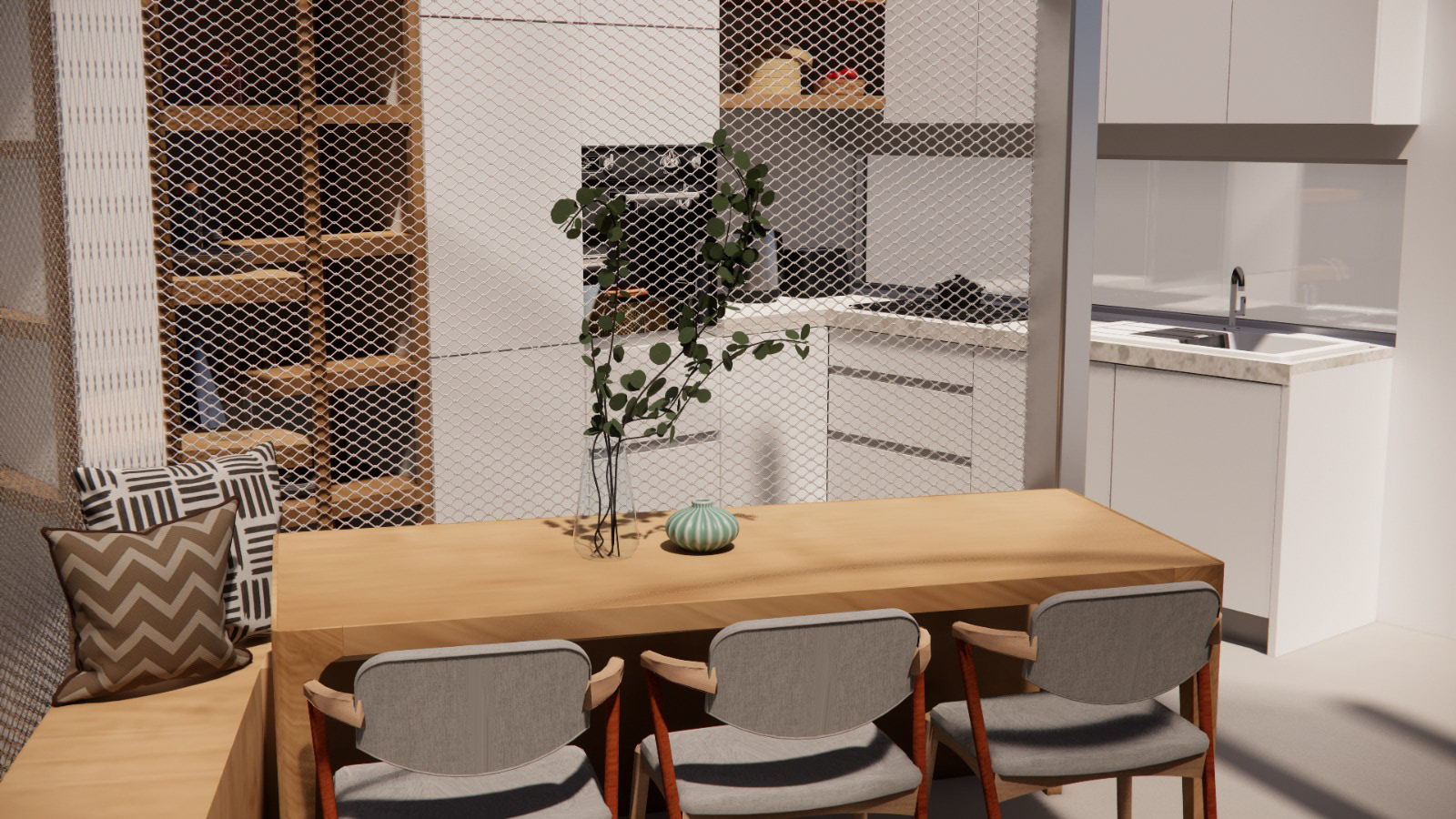
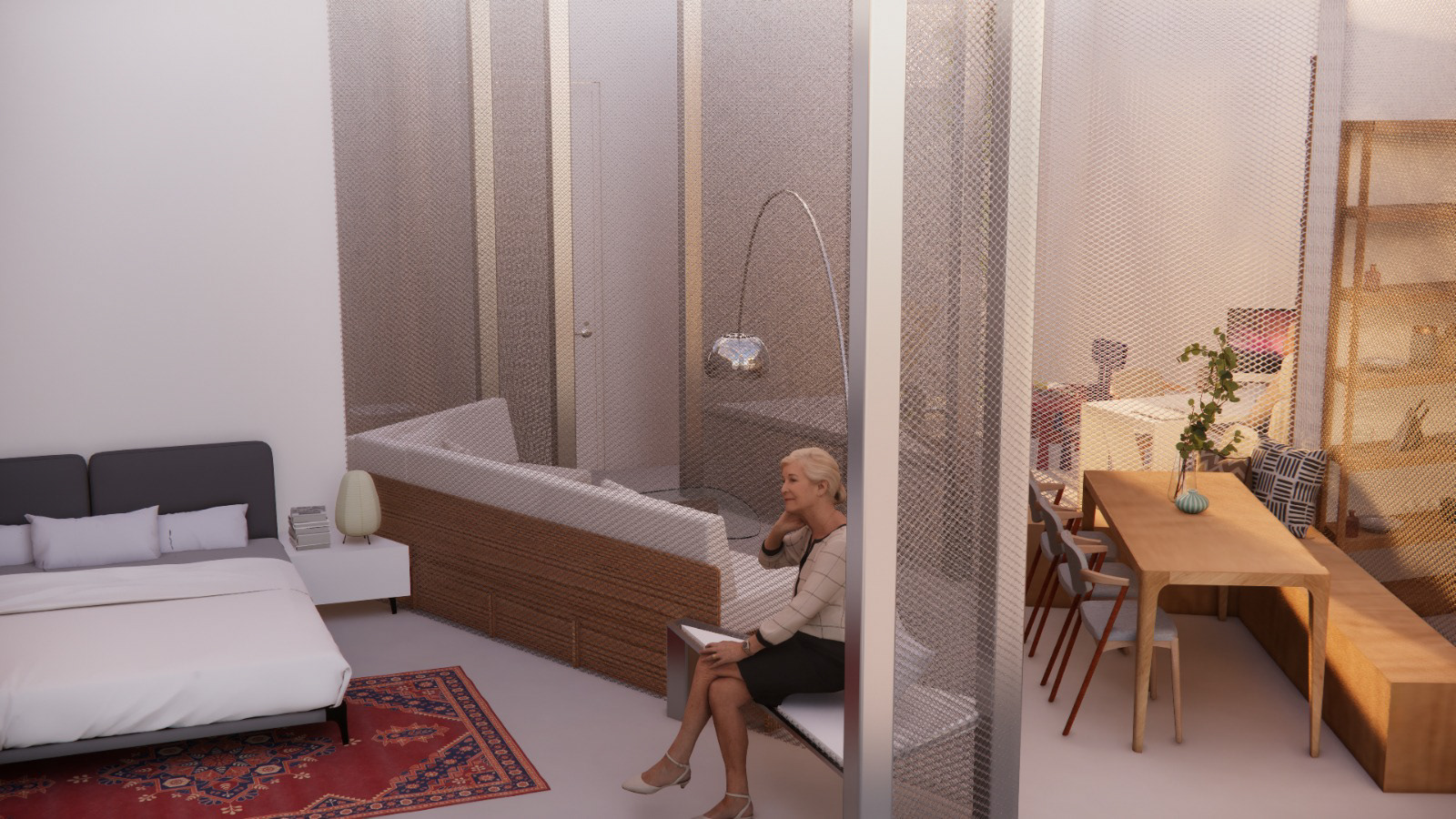
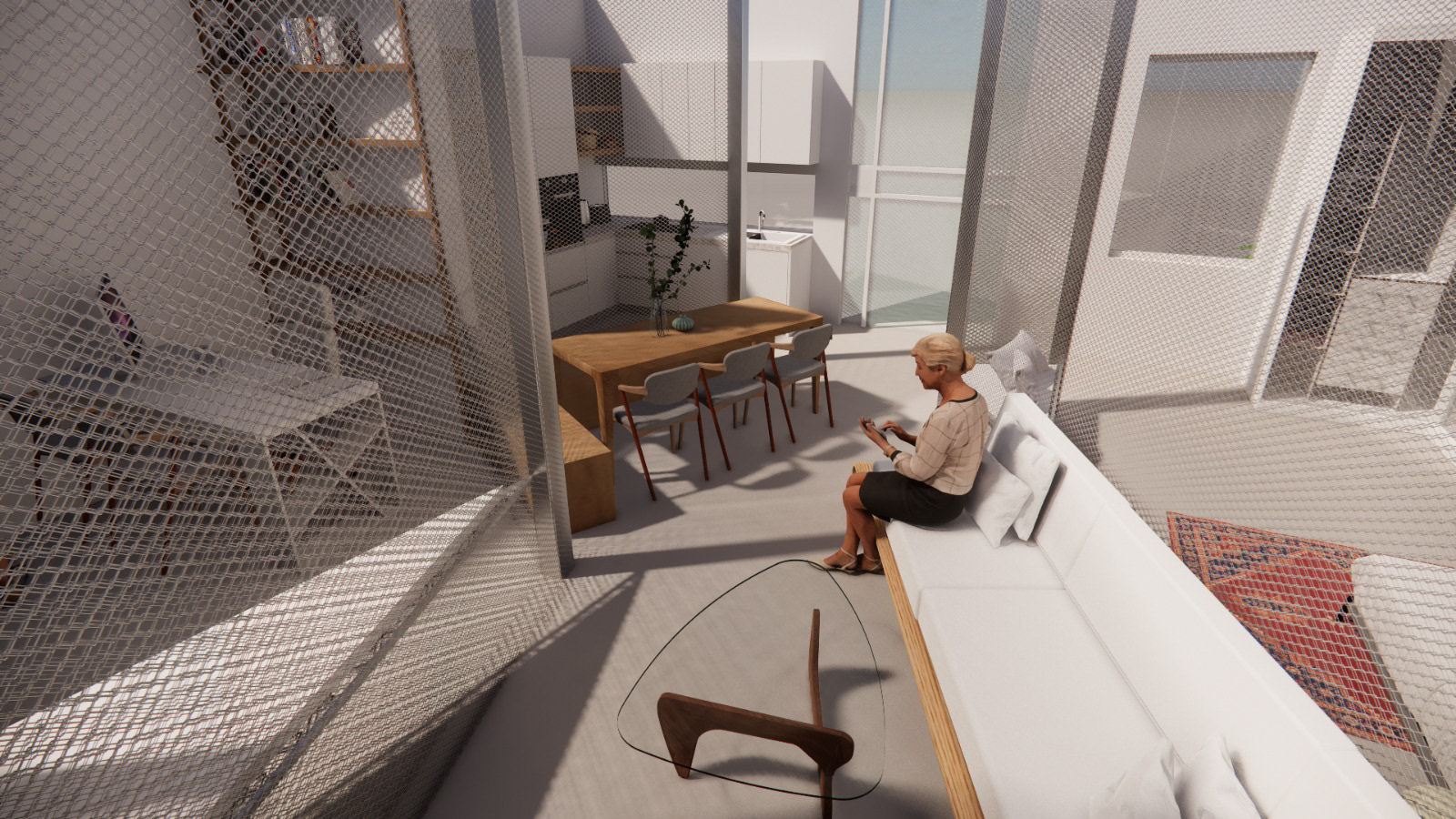
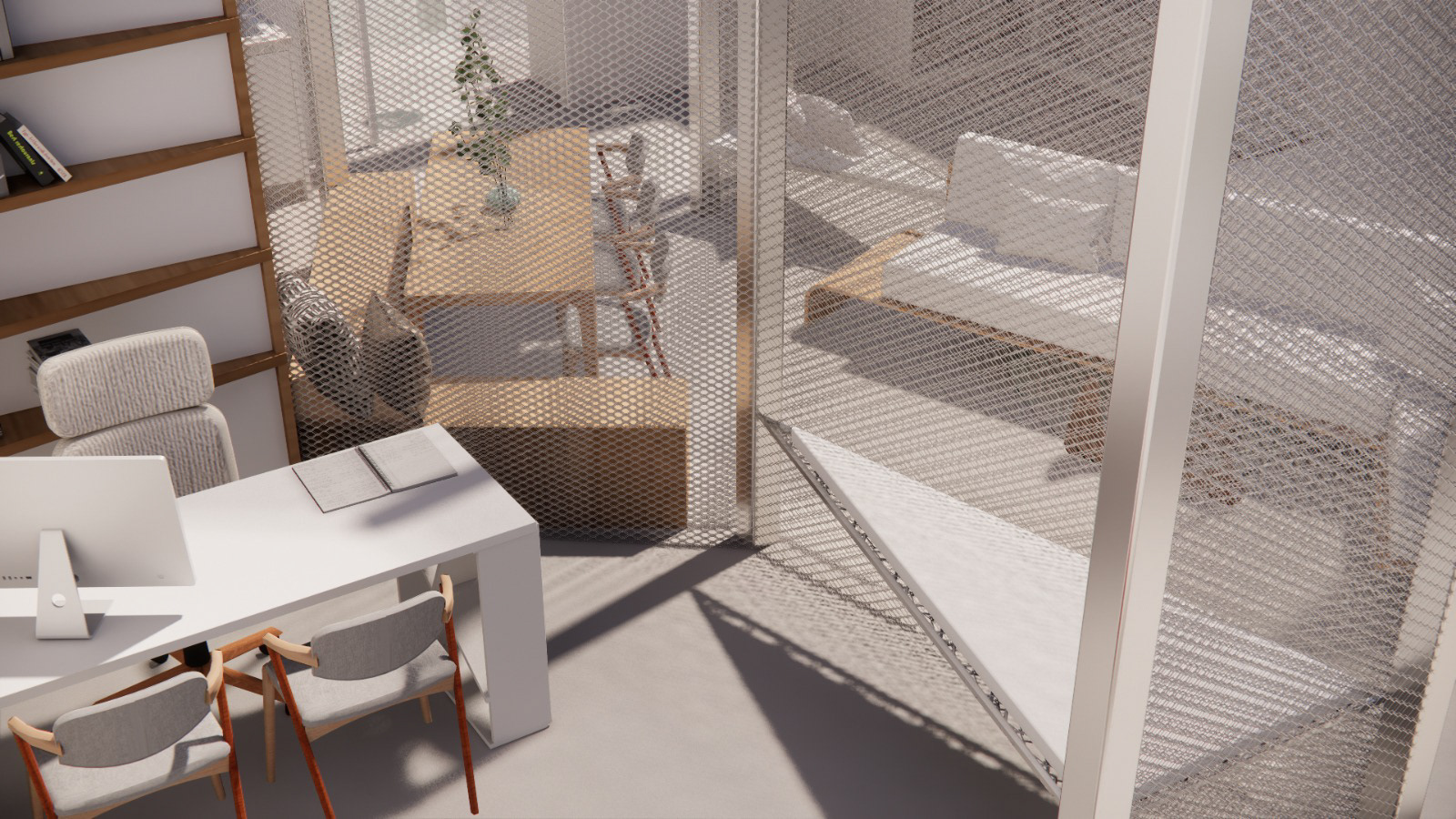
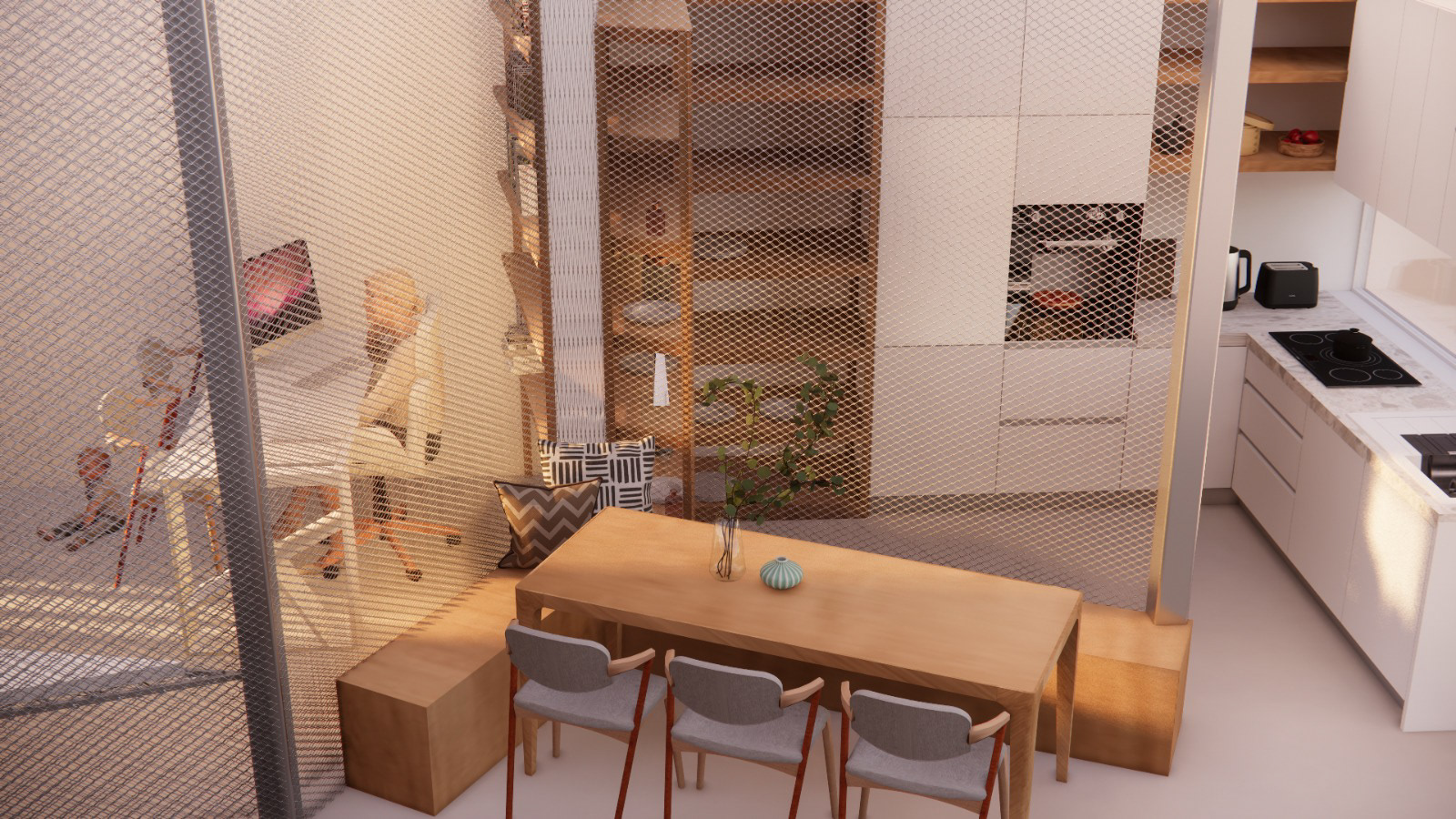
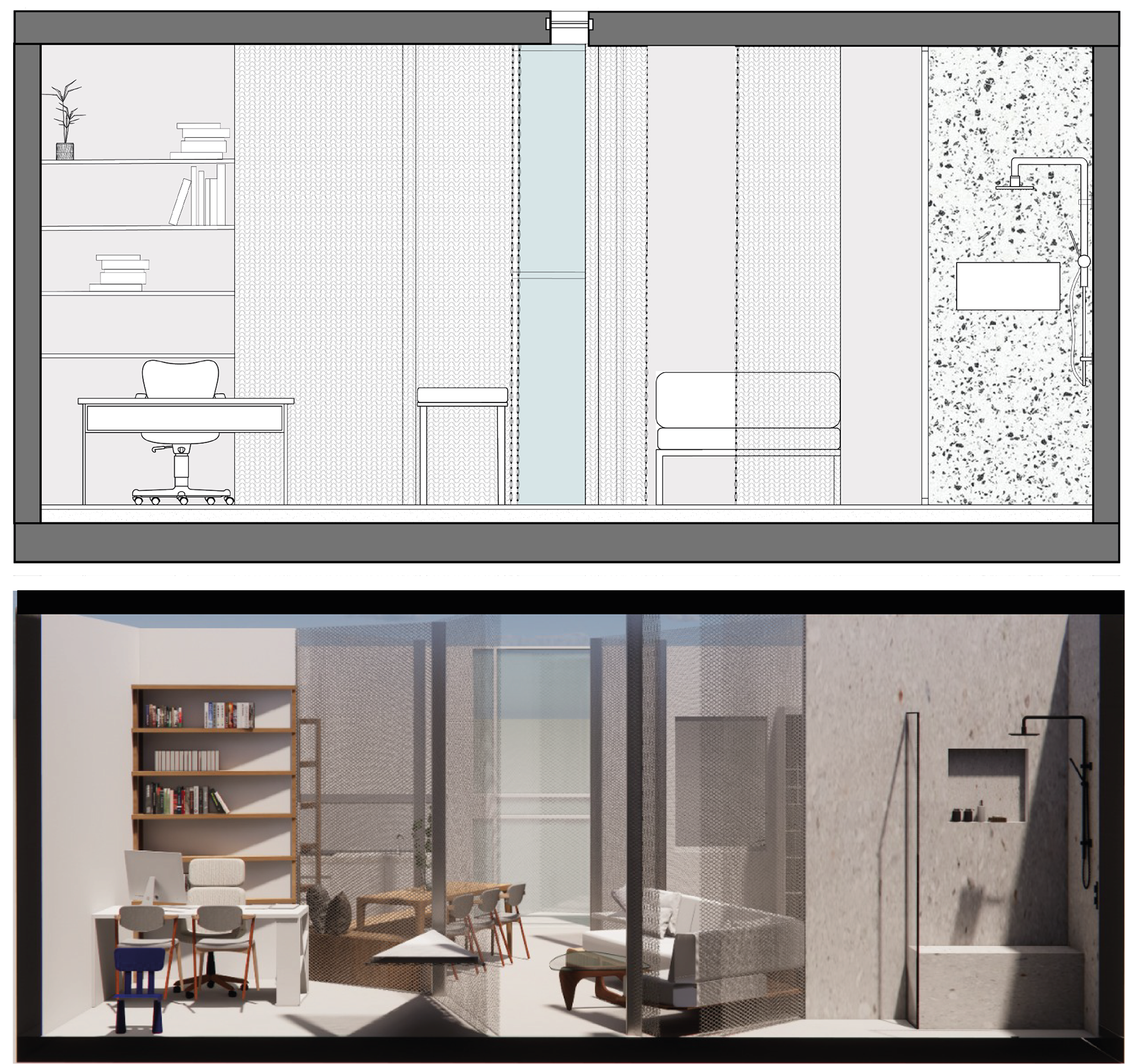
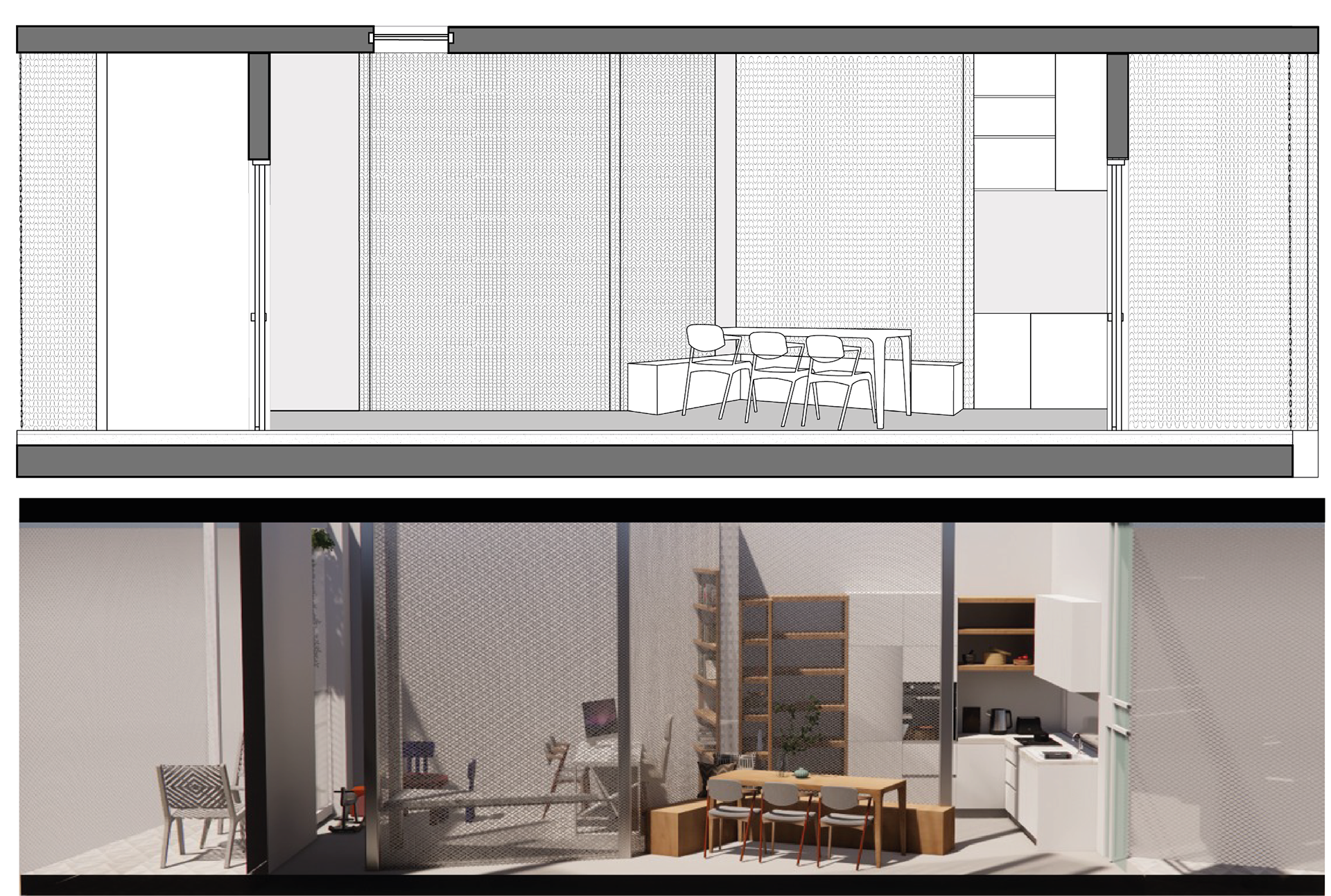
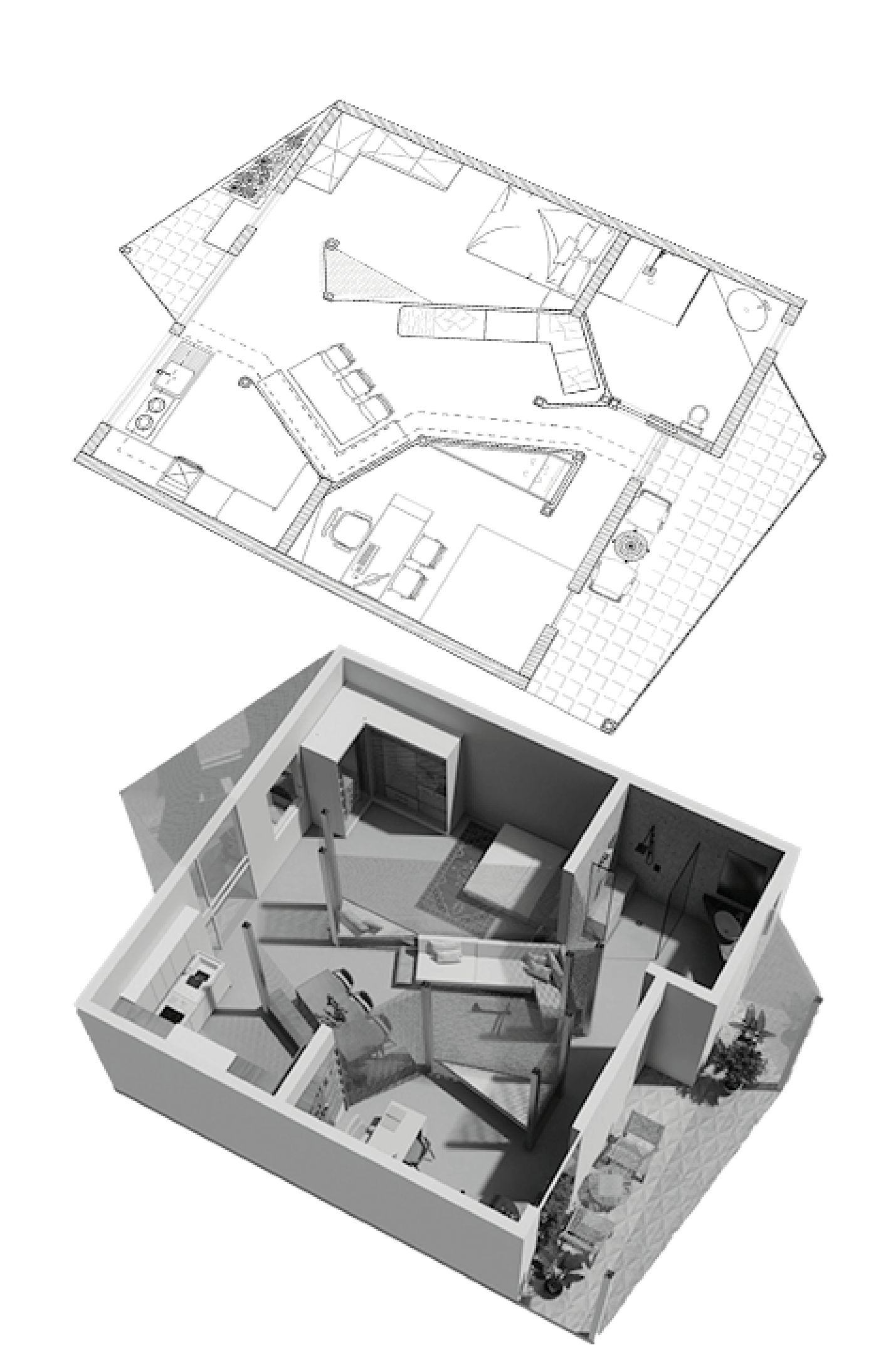
1. Separating the functions of the apartment into two spaces - when all the interior spaces are separated by a net only.
2. Creating an intermediate space that separates the two halves of the apartment - in which we inserted the living space, which is also used as a waiting space for visitors and is located next to the clinic.
3. The division of the apartment into two spaces requires a passage through the foyer, while the use of the net as a partition allows a view to the other functions.
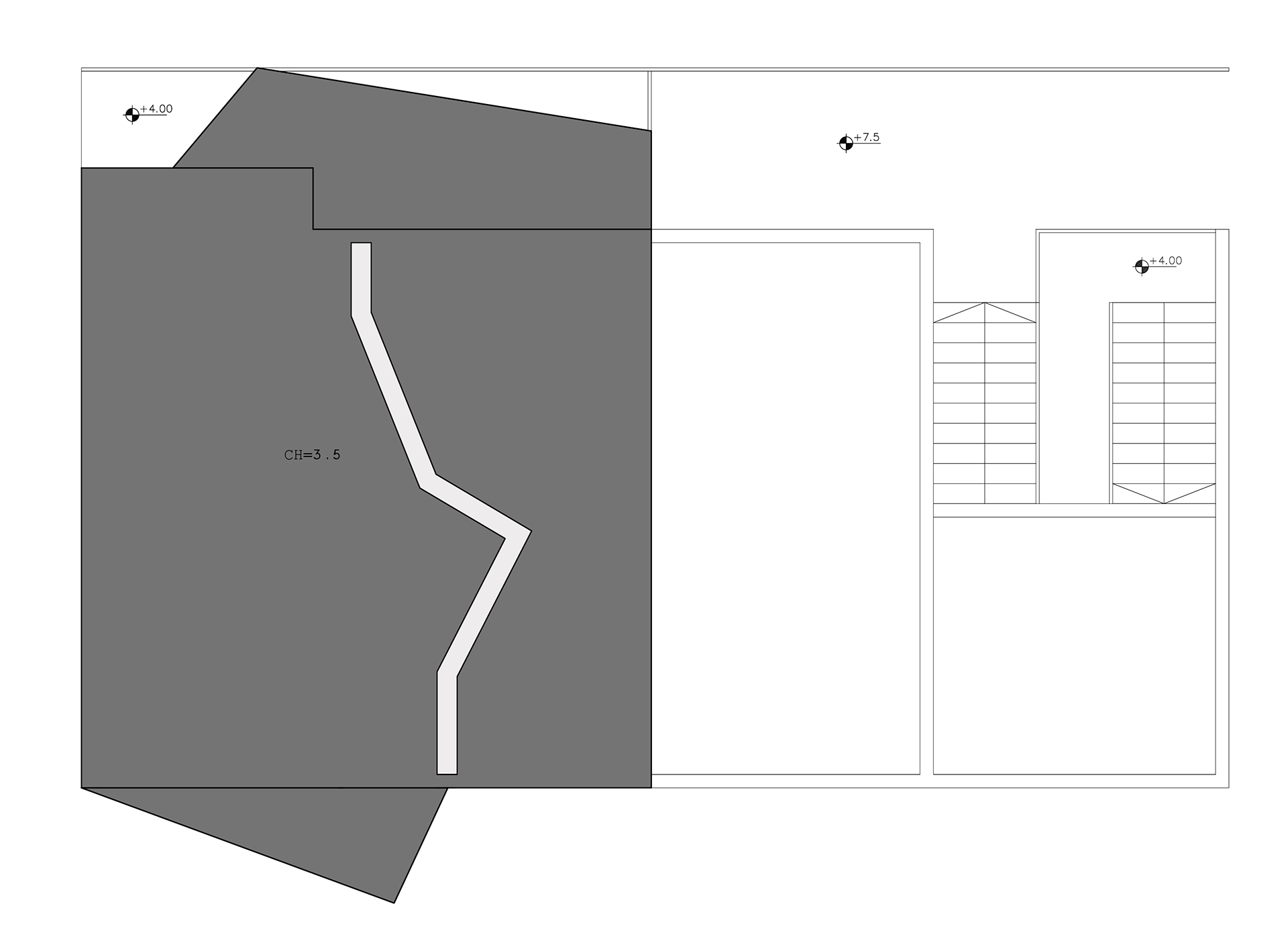
4. The interior space crosses the apartment along its length from end to end, where we created a continuous skylight with the aim of creating additional depth of field.
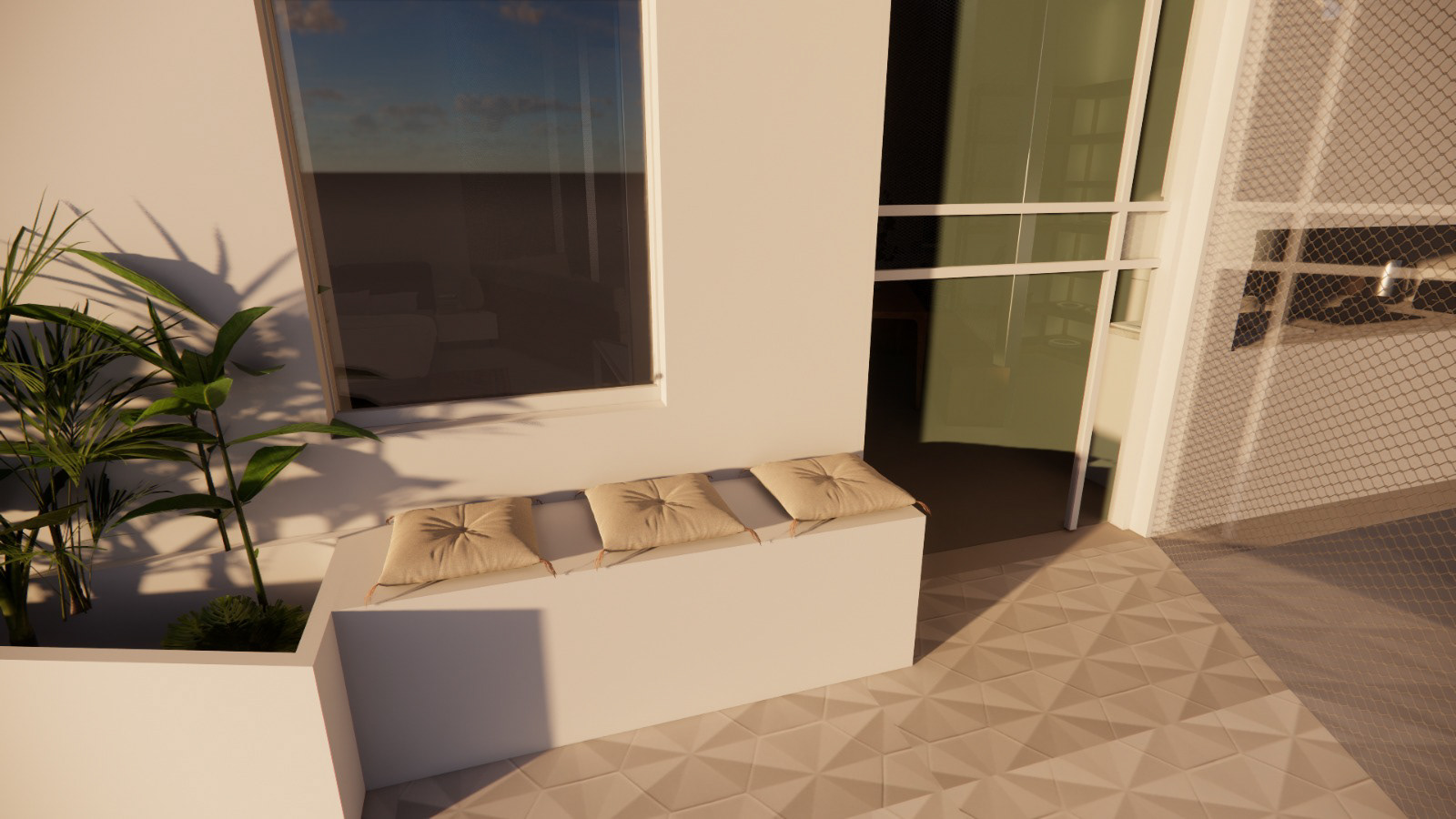
5. In another attempt to blur the boundaries, we created 2 balconies - one in front of the house and the other more private through the intermediate space, with the geometry of the 2 balconies following the interior walls of the house.
Floor and roof connection detail | 1:5